Abstract Reasoning Test - Free Practice
Abstract reasoning is pure pattern-spotting. Practise free here and learn the rules that unlock each sequence.
Practise free now
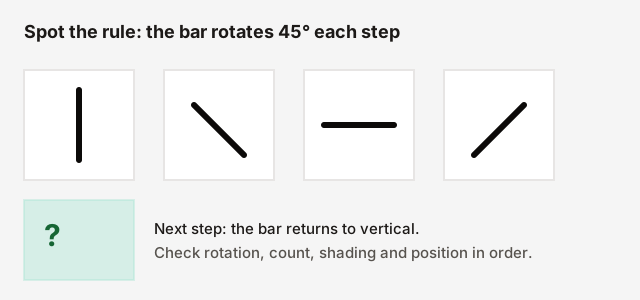
Abstract (or inductive) reasoning tests measure how well you infer the rule behind a set of shapes and apply it. There is no reading or maths - just logic across changes in shape, rotation, count and position.
A typical question shows a sequence or a grid of figures with one missing, and you pick the option that continues the pattern. The rules almost always come from a short checklist: something is rotating, the number of elements is increasing or decreasing, shading or colour is alternating, a shape is being added or removed, or position is shifting around the frame. Strong test-takers run through that checklist in order rather than staring at the whole figure hoping the answer jumps out.
Because the tests are language-free, they travel across countries and roles, which is why so many graduate and cognitive assessments include them. Sit the free test below and study the worked rule for each item to train your eye to spot which of those changes is in play. Every question here is free with a full worked answer, no signup and no card.
Common questions
What is abstract reasoning?
How do I improve at abstract reasoning?
Written and reviewed by the Aptitude Practice editorial team. Last reviewed 9 July 2026. See how we build and check our tests in our methodology. Independent practice, not affiliated with any test publisher or employer named.