Diagrammatic Reasoning Test - Free Practice
Diagrammatic reasoning tests how you follow rules through a process. Practise free here with every answer worked through.
Practise free now
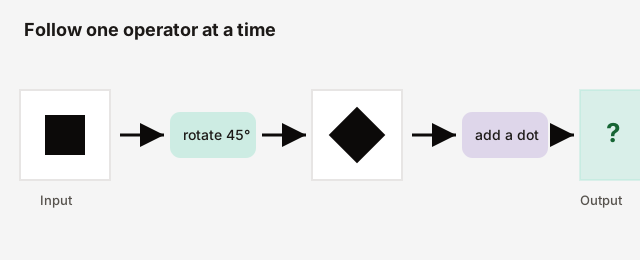
Diagrammatic reasoning presents inputs, operators that transform them, and asks for the output (or the missing operator). It rewards careful, step-by-step rule-following under time pressure.
Each operator does one predictable thing - rotate, reflect, swap two elements, change a colour, add or remove a shape - and the test chains several together. The reliable method is to work one operator at a time, writing or picturing the intermediate result, rather than trying to jump straight from input to output. Errors almost always come from combining two steps in your head and losing track of the order.
These tests overlap heavily with abstract and inductive reasoning and appear in many technical and graduate assessments. Sit the free test below and study each worked chain of operations so the operator effects become second nature. Every question here is free with a full worked answer, no signup and no card.
Common questions
What is diagrammatic reasoning?
How do I get better at it?
Written and reviewed by the Aptitude Practice editorial team. Last reviewed 9 July 2026. See how we build and check our tests in our methodology. Independent practice, not affiliated with any test publisher or employer named.